A reorder process that takes ten minutes a month, and the two badge choices that make it cheaper.
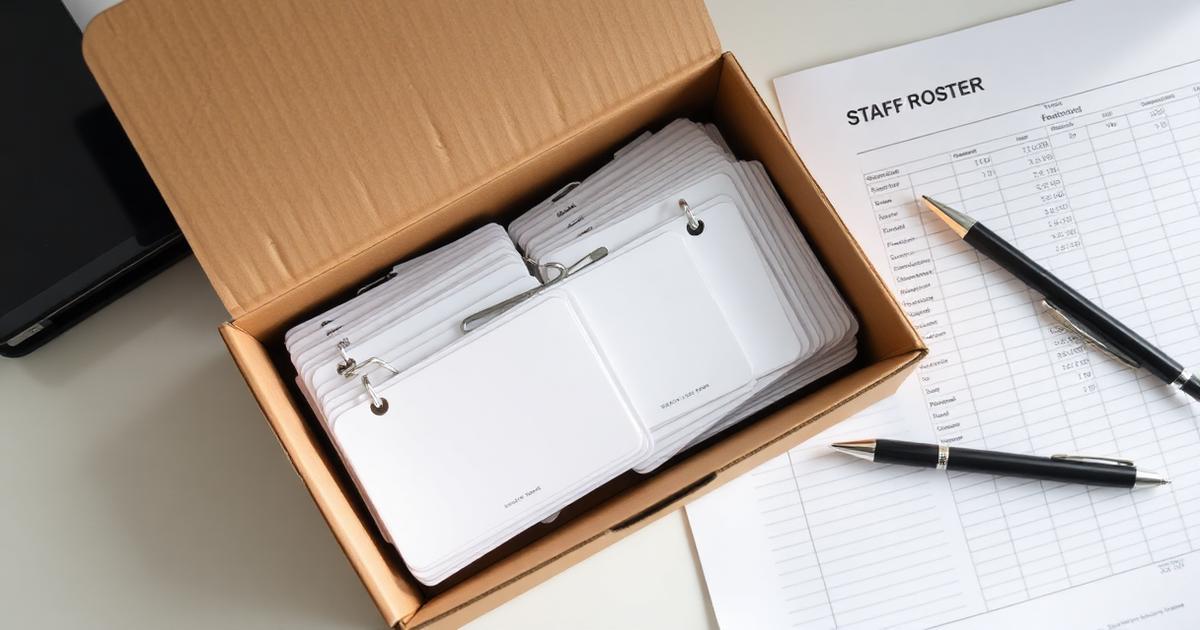
High-turnover teams should batch reorders on a fixed day each month, keep a small buffer of blank or reusable badges for the gap, and store the approved artwork and font once so nobody rebuilds the layout each time. Ordering one badge at a time is what makes badge programs expensive: at quantity one a printed plastic badge is $8.99, and the same badge is $7.49 at 101 pieces.
The monthly routine
- Pick a day, for example the first Monday. Everyone hired since the last one goes on the same order.
- Keep a single spreadsheet with first name, second line and location. That file is the order.
- Approve one proof for the layout, then reuse it. Only the names change.
- Ship to one address and distribute internally. Split shipping is the other quiet cost in badge programs.
Cover the gap two ways
| Option | Cost pattern | Best for |
|---|---|---|
| Reusable window badge with a paper insert | Buy once, reprint the insert | Trial periods, seasonal staff, volunteers |
| Blank badge kit printed in-house | Low per badge, needs a printer | Sites that hire weekly |
| Rush production on the real badge | Premium over standard | Single senior hire who is customer facing on day one |
Reduce how often you reorder at all
First name only badges survive turnover better than full name badges, because a returning seasonal worker or a same-name replacement can reuse one. Roles that change often, like shift lead, do better on a badge with the title on a swappable line than baked into the engraving. Neither choice makes the badge worse for the customer, and both cut the reorder count.
What to keep on file
Logo in vector form, the exact font and point sizes, the badge size and attachment, and the finish. Five lines in a document. It removes the annual conversation about why the new badges do not match the old ones.