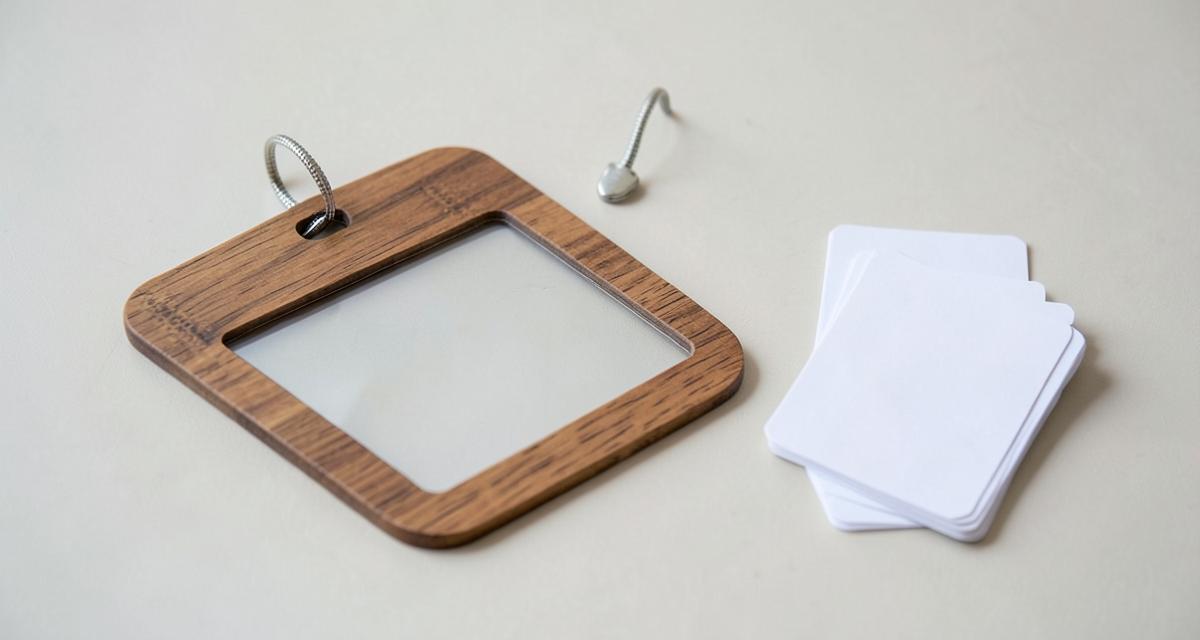
Reusable frames beat any material claim. Here is what genuinely cuts badge waste and what is just a nicer looking throwaway.
Most badge waste has nothing to do with the material. It comes from turnover. A team that replaces a third of its staff a year throws away a third of its badges a year, and a bamboo badge in the bin is still a badge in the bin. The lever that matters is how many badges you have to make per person, not what they are made of.
1. Reusable frames with changeable inserts
A reusable badge is a frame that keeps the logo and a window or slot that takes a printed insert. When someone leaves, the insert changes and the frame stays. On a high turnover team this is the single biggest reduction in material used, and it also badges a new hire the same day instead of waiting on a production run.
2. Buy the badge that lasts, not the cheapest one
A printed plastic badge that gets scuffed and replaced twice a year uses more material over three years than one engraved metal badge that never changes. For long tenure roles, engraved two ply laminate or solid metal is the lower waste choice even though it costs more up front, because the name is cut into the material rather than printed on the surface.
3. Real wood and bamboo: nice, with caveats
Wood badges are genuinely appealing and read as considered, which is why hotels, spas and cafes like them. Treat them as a durability and aesthetics decision. They are a renewable material, they take engraving well, and they hold up fine indoors. They are not a waste solution on their own, because the badge still gets replaced when the person leaves unless you pair it with reusable inserts.
| Option | Typical life | Best for |
|---|---|---|
| Printed plastic | About a year of daily wear | Short tenure and seasonal staff |
| Real wood engraved | Years indoors | Hospitality and front of house |
| Engraved two ply | Years, resists grease and cleaners | Kitchens, clinics, industrial floors |
| Solid metal | Effectively the length of employment | Uniform programs and leadership |
| Reusable frame plus insert | Frame outlives many wearers | Any team with real turnover |
4. Order in one run, not five
Consolidating a year of hiring into fewer, larger orders cuts packaging and shipments, and quantity pricing moves in your favor at the same time. Ordering a small buffer of blanks or spare inserts up front avoids a string of single badge shipments across the year.
5. Keep the parts that outlive the badge
- Magnets, clips and pins can move to a replacement badge in most cases.
- Lanyards and reels are separate items with their own lifespan. Replace the broken part, not the whole assembly.
- Holders protect a printed badge and are worth it wherever badges get scanned or clipped repeatedly.
What to ignore
Vague eco language on a product page is not a specification. Ask what the badge is made of, how long it lasts in the conditions your staff work in, and whether the design can be reused for the next hire. Those three answers describe the actual footprint better than any label.
The greenest badge is the one you do not have to make twice.